Cyclic Defrost Magazine |  |
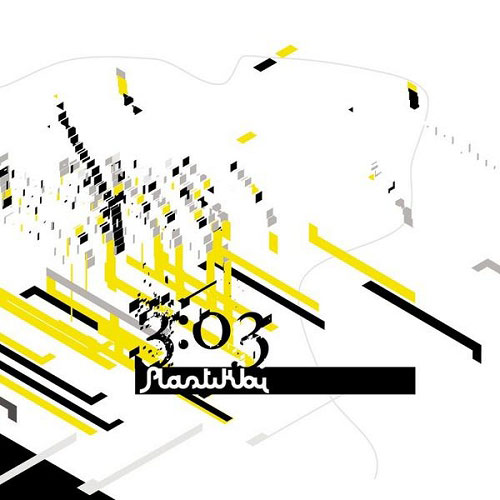
- Plastik Joy – 3:03 (n5MD)
- The History of the Units – The Early Years: 1977 – 1983 (Community Library)
- Cirrus – Mama Please (Iris/ Select Audio Visual)
- Rice Corpse – Mrs Rice (Dual Plover)
| Posted: 12 Jun 2009 02:36 PM PDT
Downbeat electronic / instrumental duo Cristiano Nicolini and Fannar Asgrimsson first met back in 2005 while they were both studying audio engineering in Barcelona, a meeting that resulting in their ongoing partnership as Plastik Joy, despite the two continuing to live in Italy and Iceland respectively. With Nicolini coming from more of an electronic music background, while Asgrimsson has his roots in folk-rock, this impressive debut album on n5MD ‘3:03′ (apparently named for the time at which recording typically halted in the early morning hours) introduces the duo’s blend of intricately-detailed post-rock and IDM / glitch influences. Anchored around the gentle female vocals of guest singer S. Kawasaki (who appears on about half the tracks here), tracks such as opener ‘Sleepy Quest For Coffee’ and ‘Twenty-Ninth Of April’ see the duo constructing meticulously-detailed and sweepingly melancholic post-rock landscapes, delicate guitar strokes and trailing keyboards merging with subtle glitchy textures, whirring harmonics and fractured IDM rhythms to create a fusion that’s not completely dissimilar to Dntel, or perhaps Telefon Tel Aviv during one of their more quiet, introspective moments. While for the most part the eleven tracks here see Plastik Joy setting the cruise control for a swooning, dreamlike glide, moody highlight piece ‘Mediaspiace’ sees thunderclouds moving into the foreground as S. Kawasaki’s ominous spoken word performance and pensive chiming guitar chords give way to crunching rock powerchords and crashing drums, the entire track bursting into flame before things settle back down to a glow that smoulders on through to the end of this impressive collection. An excellent debut album from Plastik Joy that’s also one of the best winter headphone soundtracks I’ve heard so far this year. |
| The History of the Units – The Early Years: 1977 – 1983 (Community Library) Posted: 12 Jun 2009 02:36 PM PDT
To the units the guitar was a symbol of safe acceptable rebellion. Mass marketed in bright colours it was the leather jacket of musical instruments, the symbol of uber cool for the anti establishment anti consumerist consumer. So instead they went with synths, which if you think about it, being bigger and wider than guitars, are actually much more phallic. Part of the San Franciscan/ West Coast scene that also spawned the overtly political anti establishment punk rock of the Dead Kennedy’s with whom they played with on a regular basis, they existed in the underground at the confluence between punk rock, performance art, uni life and the rich and varied alternative lifestyle scene of the late 70’s. They performed alongside propaganda films of their own making, their experimental films often recontextualising found footage, and attempting to break down some of the traditional rock music cliches, eschewing the godlike status afforded the lead singer and attempting to reduce the divide between the performer and audience. Even the name Units taps into consumerist speak, though also draws parallels to a bunch of people unselfconsciously wandering around these days wearing t-shirt’s emblazoned with the word ‘Tool.’ You’d probably call them synth punk, though they were much closer to Devo than Suicide, the confrontation in their critiques, not their sound or stage presence, though they weren’t adverse to relieving themselves of urine on a regular basis. They sang about torturing bugs, about free thought and not viewing the world through the corporate framework which we’re still fed. Most of the material has quite a prominent pop element, quirky and odd, with oscillating synth lines and metronomic percussion. In the late 70’s this music would have been mind numbingly futuristic, confrontational simply due to its artificial nature, or perhaps simply because it’s not guitar bass and drums. Listening to it after the electronic revolution and you’d have to say that this music stands up, sounding at times like everything from The Residents to Trans Am to local Melbourne duo Fabulous Diamonds – which may give some indication of the bands far reaching influence. There’s a balance in the music between songs with the aforementioned incisive critical lyrics and these incredible groove based instrumentals which veer between Wendy Carlos to the soundtrack to the Forbidden Planet. There’s a certain kind of mischievous experimentation here though too, suggesting that synth punk could actually be fun. This collection of 21 tracks comes with 30 odd pages of artwork and an excerpt from their manifesto for the uninitiated. It’s also the first legitimate reissue of the band’s music, which is not just a historical document, because demonstrating how far electronic music hasn’t come, it could’ve easily been made today. Bob Baker Fish |
| Cirrus – Mama Please (Iris/ Select Audio Visual) Posted: 11 Jun 2009 06:57 PM PDT
With a Tunisian singer Nawel Ben Kraiem who sings in English, French and Arabic, above guitar bouzouki, violin, darbuka and djembe, French ensemble Cirrus are a unique proposition. Their music is a kind of folk pop hybrid, with the music very much grouped around the evocative female vocals, and the violin and guest cello adding a touch a chamber class. They seem to operate on one level for a while then thanks to the propulsive hand drums manage to kick it up a notch, though again following the lead of the vocals. The instruments are in the main acoustic, adding to the folk feel, and the music is this interesting mix of traditional elements of the orient and more contemporary points, such as in She Kills where the the violin cheekily borrows the man theme from Morricone’s The Good The Bad and The Ugly and the acoustic guitar does that percussive chugging that Ennio loved so much. Yet there are more contemporary less explicit influences spread throughout Mamma Please that recall indie rock, blues or even dance music. Yet the key to Cirrus is their ability to integrate all these influences under those extraordinary breathless evocative vocals. Bob Baker Fish |
| Rice Corpse – Mrs Rice (Dual Plover) Posted: 11 Jun 2009 06:54 PM PDT
Just when you thought that all trios of improvising musicians were just pretentious excuses to plink plonk and masturbate their way through the pretense that somehow the discordant mess they produce is actually a meaningful new direction in modern music for people who haven’t been schooled for 5+ years in modern composition and learned to hate music, along comes Rice Corpse. It’s the work of Sydney based lunatic glass blower and noise extraordinare Lucas Abela, who if the press release is to be believed briefly became a cultural ambassador to China, spending two months in Beijing found pianist Li Zenghui (who is actually a saxophonist) and percussionist Yang Yang, jammed with them a few times and then dragged them into the studio for this monstrosity. It’s the funniest most visceral and compelling music this writer has heard for a very long time. At times Abela feels like he’s sabotaging the aforementioned plink plonk, tearing it apart with his aggressive howls, other times he sounds like some kind of wounded inhuman animal growling irritably whilst the piano and percussion rain down around him, then there’s the moment where it all coalesces into the adolescent noise frenzy that is spirited and unrelenting, a charging jam that you could only imagine as the sound of the apocalypse. Perhaps what I find most fascinating about Rice Corpse is how the trio don’t sound tied down to any particular form of improvisation as is so commonly the case. This may be because Abela’s contact mic’d glass through distortion pedals produces such a unique, and I would imagine quite difficult to play along with, sound, but really I believe it has a lot to do with the musicians desire to pull something quite unique out of the box. At times it’s quite musical, even positively melodic, at other times the humour comes from the ludicrous ill fitting nature of this trio, yet then it all becomes quite hysterical, pushing you to face head on, the joy, freedom and possibilities of experimental music – rubbing your face in it over and over again, until you just want to be left alone. Genius. Bob Baker Fish |


| You are subscribed to email updates from Cyclic Defrost Magazine To stop receiving these emails, you may unsubscribe now. | Email delivery powered by Google |
Inbox too full?  | |
| Google Inc., 20 West Kinzie, Chicago IL USA 60610 | |


